NASA announced Thursday that it is sending a drone-style rotorcraft to Titan, Saturn’s largest moon.
Dragonfly, as the mission is called, is capable of soaring across the skies of Titan and landing intermittently to take scientific measurements. The mission will be developed and led from the Applied Physics Laboratory at Johns Hopkins University in Laurel, Md. It is scheduled to launch in 2026.
BIG NEWS: The next @NASASolarSystem mission is… #Dragonfly – a rotorcraft lander mission to Saturn’s largest moon Titan. This ocean world is the only moon in our solar system with a dense atmosphere & we’re so excited to see what Dragonfly discovers: https://t.co/whePqbuGBqpic.twitter.com/BQdMhSZfgP
“Titan is an incredibly unique opportunity scientifically,” said Elizabeth Turtle, who will lead the mission for the lab as its principal investigator, in an interview in April given before NASA’s announcement. “Not only is it an ocean world — an icy satellite with a water ocean in its interior — but it is the only satellite with an atmosphere. And the atmosphere at Titan has methane in it, which leads to all sorts of rich organic chemistry happening at even the upper reaches of the atmosphere.”
Titan has long intrigued planetary scientists. On Christmas Day 2004, the spacecraft Cassini launched a probe, Huygens, to Titan’s surface, revealing a world analogous to a primordial Earth. Rather than water, however, Titan’s seas are filled with liquid methane.
Where a Mars rover is limited to inching forward over a decade or longer, for the Dragonfly team, Titan’s sky and the drone’s nuclear fuel source are the limit.
“We have the capacity, over the mission’s lifetime, to go hundreds of kilometers. One of the advantages we have is that we can always scout the next site. We can fly ahead, look at it, see what kind of terrain there is, and decide whether we want to go there or elsewhere,” says Dr. Turtle.
The spacecraft has been under consideration for two-and-a-half years in NASA’s class of science missions, called New Frontiers, which are supposed to cost less than $1 billion. The competition, held between multiple institutions in government and academia, is not unlike a “Shark Tank” for deep space exploration.
The competition’s other finalist was Caesar — the Comet Astrobiology Exploration Sample Return mission — which intended to collect a sample of the comet 67P/Churyumov-Gerasimenko and return it to Earth for analysis. That comet was previously explored by Rosetta, a spacecraft built by the European Space Agency, until its mission ended in 2016.
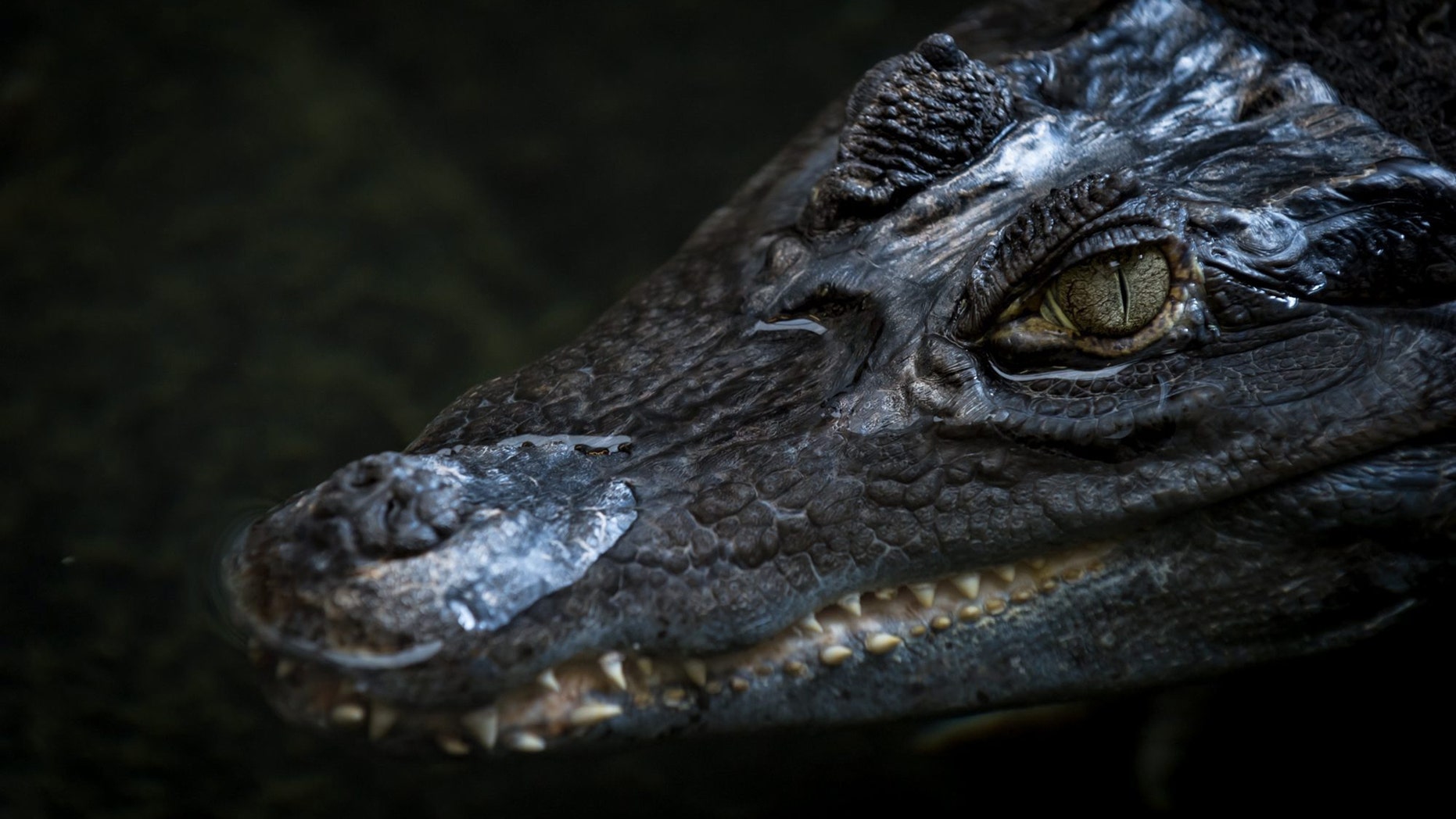
Ancient crocodiles had vegetarian cousins that roamed the planet 200 million years ago, research shows. (Credit: SWNS)
Modern crocodiles had ancient vegetarian cousins that roamed the planet 200 million years ago, research shows.
Tooth fossils revealed between three and six members of the crocodile and alligator family had specialized teeth for chewing on plants.
Researchers reconstructed their vegetarian diets by analyzing the fossils of 146 teeth from 16 crocodyliforms.
Many of their "complex" sets of teeth were shaped unlike any modern day herbivore until the plant-eaters were wiped out along with the dinosaurs 66 million years ago.
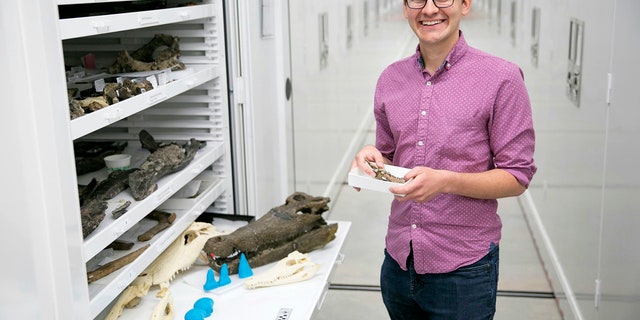
Study author Keegan Melstrom, a doctoral student at the University of Utah, US, said: "The most interesting thing we discovered was how frequently it seems extinct crocodyliforms ate plants.
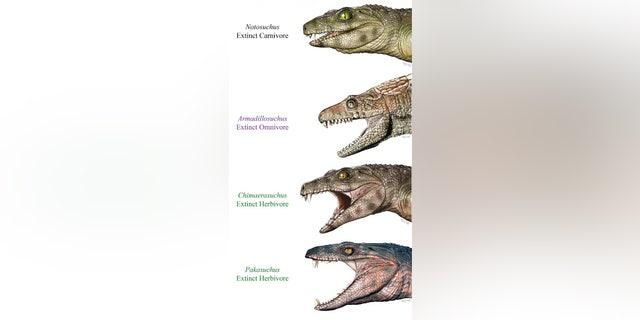
"Carnivores possess simple teeth whereas herbivores have much more complex teeth.
"Omnivores, organisms that eat both plant and animal material, fall somewhere in between.
Tooth fossils revealed between three and six members of the crocodile and alligator family had specialized teeth for chewing on plants. Researchers reconstructed their vegetarian diets by analyzing the fossils of 146 teeth from 16 crocodyliforms. Many of their "complex" sets of teeth were shaped unlike any modern day herbivore until the plant-eaters were wiped out along with the dinosaurs 66 million years ago. (Credit: SWNS)
"Our study indicates that complexly-shaped teeth, which we infer to indicate herbivory, appear in the extinct relatives of crocodiles at least three times and maybe as many as six.
"Part of my earlier research showed that this pattern holds in living reptiles that have teeth, such as crocodylians and lizards.
"So these results told us that the basic pattern between diet and teeth is found in both mammals and reptiles, despite very different tooth shapes, and is applicable to extinct reptiles."
All crocodylians alive today have a similar body shape with relatively simple, conical teeth ideal for their semi-aquatic generalist carnivore lifestyles.
But the tooth fossils in the study were clearly non-carnivorous and appeared to have specialized forms not seen in modern day animals.
Mr. Melstrom and Dr. Randall Irmis, chief curator of paleontology at the Natural History Museum of Utah, US, compared the tooth complexity of extinct crocodyliforms to those of living animals to work out what they ate.
They used a method that was originally developed for use in living mammals - measuring the teeth's dimensions and morphological features at a resolution of 25 data rows per tooth.
Mr. Melstrom said the unexpected variety in crocodyliforms' teeth showed they were able to thrive in a greater range of ecological environments than previously thought.
He also found the plant-eaters appeared early in the evolutionary history of the family, shortly after the end-Triassic mass extinction some 200 million years ago.
They existed until the end-Cretaceous mass extinction that killed off all dinosaurs except birds.
Many of their "complex" sets of teeth were shaped unlike any modern day herbivore until the plant-eaters were wiped out along with the dinosaurs 66 million years ago. (Credit: SWNS)
The fossil analysis suggested that between three and six species evolved herbivore diets during in Mesozoic era.
Mr. Melstrom said: "Our work demonstrates that extinct crocodyliforms had an incredibly varied diet.
"Some were similar to living crocodylians and were primarily carnivorous, others were omnivores and still others likely specialized in plants.
"The herbivores lived on different continents at different times, some alongside mammals and mammal relatives, and others did not.
"This suggests that an herbivorous crocodyliform was successful in a variety of environments."
He planned to continue to reconstruct the diets of extinct crocodyliforms, including in fossilized species that are missing teeth.
The researcher also wanted to understand why the extinct relatives of crocodiles diversified so radically after one mass extinction but not the one that killed the dinosaurs - and whether dietary ecology could have played a role.
The study by the University of Utah and the National History Museum of Utah in the US was published in the journal Current Biology.
The image shows 4D atomic motion is captured in an iron-platinum nanoparticle at three different annealing times. The experimental observations are inconsistent with classical nucleation theory, showing the need of a model beyond this theory to explain early stage nucleation at the atomic scale. Credit: Alexander Tokarev
Everyday transitions from one state of matter to another—such as freezing, melting or evaporation—start with a process called "nucleation," in which tiny clusters of atoms or molecules (called "nuclei") begin to coalesce. Nucleation plays a critical role in circumstances as diverse as the formation of clouds and the onset of neurodegenerative disease.
A UCLA-led team has gained a never-before-seen view of nucleation—capturing how the atoms rearrange at 4-D atomic resolution (that is, in three dimensions of space and across time). The findings, published in the journal Nature, differ from predictions based on the classical theory of nucleation that has long appeared in textbooks.
"This is truly a groundbreaking experiment—we not only locate and identify individual atoms with high precision, but also monitor their motion in 4-D for the first time," said senior author Jianwei "John" Miao, a UCLA professor of physics and astronomy, who is the deputy director of the STROBE National Science Foundation Science and Technology Center and a member of the California NanoSystems Institute at UCLA.
Research by the team, which includes collaborators from Lawrence Berkeley National Laboratory, University of Colorado at Boulder, University of Buffalo and the University of Nevada, Reno, builds upon a powerful imaging technique previously developed by Miao's research group. That method, called "atomic electron tomography," uses a state-of-the-art electron microscope located at Berkeley Lab's Molecular Foundry, which images a sample using electrons. The sample is rotated, and in much the same way a CAT scan generates a three-dimensional X-ray of the human body, atomic electron tomography creates stunning 3-D images of atoms within a material.
Miao and his colleagues examined an iron-platinum alloy formed into nanoparticles so small that it takes more than 10,000 laid side by side to span the width of a human hair. To investigate nucleation, the scientists heated the nanoparticles to 520 degrees Celsius, or 968 degrees Fahrenheit, and took images after 9 minutes, 16 minutes and 26 minutes. At that temperature, the alloy undergoes a transition between two different solid phases.
Although the alloy looks the same to the naked eye in both phases, closer inspection shows that the 3-D atomic arrangements are different from one another. After heating, the structure changes from a jumbled chemical state to a more ordered one, with alternating layers of iron and platinum atoms. The change in the alloy can be compared to solving a Rubik's Cube—the jumbled phase has all the colors randomly mixed, while the ordered phase has all the colors aligned.
In a painstaking process led by co-first authors and UCLA postdoctoral scholars Jihan Zhou and Yongsoo Yang, the team tracked the same 33 nuclei—some as small as 13 atoms—within one nanoparticle.
"People think it's difficult to find a needle in a haystack," Miao said. "How difficult would it be to find the same atom in more than a trillion atoms at three different times?"
The results were surprising, as they contradict the classical theory of nucleation. That theory holds that nuclei are perfectly round. In the study, by contrast, nuclei formed irregular shapes. The theory also suggests that nuclei have a sharp boundary. Instead, the researchers observed that each nucleus contained a core of atoms that had changed to the new, ordered phase, but that the arrangement became more and more jumbled closer to the surface of the nucleus.
Classical nucleation theory also states that once a nucleus reaches a specific size, it only grows larger from there. But the process seems to be far more complicated than that: In addition to growing, nuclei in the study shrunk, divided and merged; some dissolved completely.
"Nucleation is basically an unsolved problem in many fields," said co-author Peter Ercius, a staff scientist at the Molecular Foundry, a nanoscience facility that offers users leading-edge instrumentation and expertise for collaborative research. "Once you can image something, you can start to think about how to control it."
The findings offer direct evidence that classical nucleation theory does not accurately describe phenomena at the atomic level. The discoveries about nucleation may influence research in a wide range of areas, including physics, chemistry, materials science, environmental science and neuroscience.
"By capturing atomic motion over time, this study opens new avenues for studying a broad range of material, chemical and biological phenomena," said National Science Foundation program officer Charles Ying, who oversees funding for the STROBE center. "This transformative result required groundbreaking advances in experimentation, data analysis and modeling, an outcome that demanded the broad expertise of the center's researchers and their collaborators."
More information:
Jihan Zhou et al. Observing crystal nucleation in four dimensions using atomic electron tomography, Nature (2019). DOI: 10.1038/s41586-019-1317-x
Citation:
Atomic motion captured in 4-D for the first time (2019, June 27)
retrieved 27 June 2019
from https://phys.org/news/2019-06-atomic-motion-captured-d.html
This document is subject to copyright. Apart from any fair dealing for the purpose of private study or research, no
part may be reproduced without the written permission. The content is provided for information purposes only.
While on the East Coast for Falcon Heavy’s third launch, also described as SpaceX’s most difficult launch yet, CEO Elon Musk dropped by the company’s Florida Starship campus and recorded a small acceptance speech for his 2019 Stephen Hawking Medal.
On the very same day, at the very same site, a lone Raptor was effectively displayed for all to see to such an extent that unaffiliated photographers were able to capture impressively detailed photos. Almost the certainly the first time a full-scale Raptor has traveled east of Texas, the engine’s presence at SpaceX’s Florida Starship site is truly surprising in light of the fact that the East Coast campus is solely focused on building orbital-class prototypes. Why, then, is one of SpaceX’s small handful of completed Raptors in Florida?
About a month ago, Elon Musk was announced as the recipient of 2019’s Stephen Hawking Medal of Science Communication. Meant to be awarded in person at a ceremony in Switzerland, Musk was unable to attend the event due to a schedule conflict with Falcon Heavy’s third launch, but the infamously busy CEO managed to film a brief thank you message that was then broadcast in Switzerland.
In what seems to be a coincidence, Musk’s message – either recorded or streamed – was filmed on SpaceX’s Florida Starship development campus, a surprisingly large facility uncovered less than two months ago. The CEO was standing in the sun directly in front of two large segments of the second orbital-class Starship prototype, part of a parallel development process featuring a second Starship prototype (and separate Starhopper) in Texas. Musk’s appearance at Starship Florida is not particularly surprising; if he flew all the way to Florida for Falcon Heavy, might as well tour SpaceX’s newest Florida facilities on the same trip.
Raptor Mystery: Episode II
What is surprising, however, is the presence of what looks like a finished Raptor engine in Florida. Looks can certainly be deceiving but SpaceX’s Florida Starship prototype – while undeniably flying through preliminary assembly – does not appear to be anywhere near flight-readiness. In Boca Chica, a partially separate SpaceX team is working to prepare Starhopper – a partial-fidelity, suborbital prototype – for low-altitude, low-velocity hop tests
SpaceX’s South Texas Starhopper sits under the blistering summer sun on June 4th. (Pauline Acalin)
Back in May, a mystery Raptor engine – believed to be serial number 04 (SN04 – appeared in South Texas and was soon installed on Starhopper for fit-checks and tests of the engine’s thrust vectoring capabilities. SN04 was soon uninstalled and shipped elsewhere; perhaps to SpaceX’s rapidly-progressing Florida Starship. If the surprise Florida Raptor is, in fact, SN04, then it’s safe to assume that it will remain inert for the time being, serving as a fit-check article and opportunity for training and familiarizing technicians and build engineers. At the moment, Florida’s Starship lies in several large segments, including what appears to be the early stages of its first propellant tank bulkhead(s).
Nevertheless, as partially demonstrated above, SpaceX’s Florida team is wasting no time at all. By all appearances, they are rapidly catching up with Texas, at least as long as Boca Chica’s Starhopper work is excluded. Given the benefit of the doubt, SpaceX Texas would likely be at a similar stage of Starship develop after a similar amount of time (~2-3 months), but much of the Boca Chica workforce has been focused intently on building, upgrading, and testing Starhopper, essentially a flying testbed for Raptor and BFR development.
To an extent, Florida’s orbital Starship prototype looks even more refined than its relatively rugged Texas cousin. Given an additional 1-2 months of nonstop work and a rate of progress similar to the last two months, it’s not out of the question that the Florida prototype will begin to seriously resemble a finished Starship. By all realistic accounts, some of the most difficult work will be found inside and around Starship’s finished aeroshell, though, and the process of outfitting avionics, plumbing the propellant/propulsion sections, and implementing hydraulic/actuation systems will be a huge amount of work.
The top half of SpaceX’s South Texas orbital Starship prototype awaits for the completion of its business end, June 4th. (Tom Cross)
Even after Starship East is effectively complete, SpaceX will still face the seemingly immense challenge of transporting a massive spacecraft that weighs several dozen tons and measures 9m (30 ft) in diameter and 60m (200 ft) tall from Cocoa to Pad 39A, a full 20-30 miles of public roads and highways. In fact, the easiest method of transporting may involve getting Starship onto a barge in the nearby Indian River and towing it 100+ miles by water to the beach adjacent to Pad 39A. Regardless, neither method is going to be quick or easy and both will put on quite a show for local observers.
Check out Teslarati’s newsletters for prompt updates, on-the-ground perspectives, and unique glimpses of SpaceX’s rocket launch and recovery processes.
SpaceX CEO Elon Musk & Raptor engine make surprise visit to Florida Starship
The difference between one of the habitually shod (left) and barefoot (right) participants. Credit: Daniel Lieberman
Before you take a pumice stone to your foot calluses just because they're unsightly, you might want to consider the idea that they are actually nature's shoes.
That's one of the messages from a new study suggesting that in certain ways, walking on callused feet can be better for you than the modern luxury of cushioned shoes.
Researchers found that calluses offer the foot protection while you're walking around, without compromising tactile sensitivity—or the ability to feel the ground. That's in contrast to cushioned shoes, which provide a thick layer of protection, but do interfere with the sense of connection to the ground.
Meanwhile, although thick-soled shoes do lessen the impact of each heel strike to the ground, they actually deliver more force into the knee joints.
No one, however, is advising people to forgo shoes—especially if they have medical conditions that make barefoot walking risky.
Study co-author Daniel Lieberman stressed that the study is about understanding a fundamental evolutionary question: How does modern footwear—a recent development in human history—differ from the natural "shoes" that humans wore for thousands of years?
"I'm not anti-shoe," said Lieberman, who heads human evolutionary biology at Harvard University. "And I'm not telling people to run around barefoot."
But, he added, you might consider taking a kinder view of the lowly callus.
"Calluses are normal, and they may have some benefits," Lieberman said.
Co-authors, Nicholas Holowka (left) and Andrew Yegian (right), measuring biomechanics of an habitually barefoot individual walking across a force plate. Credit: Daniel Lieberman
That comes with some big caveats, though: People with certain medical conditions, such as diabetes, should neither go barefoot nor let calluses build up, said Dr. Jane Andersen. She's a podiatrist and chair of the communications committee for the American Podiatric Medical Association.
People with nerve damage or poor blood circulation to the feet—from diabetes or other medical conditions—should see a foot doctor regularly and, if needed, have calluses trimmed, Andersen said. Calluses can lead to ulcers in those cases.
People with nerve-damaged feet also need to wear shoes, she said. That reduced sensation means they may not notice any cuts or other injuries they'd get while walking barefoot.
Beyond that, Andersen noted, barefoot humans of the past were not running around on hot asphalt and other modern surfaces.
The findings, published June 26 in the journal Nature, are based on just over 100 adults from Kenya and the United States. Both groups included people who said they were barefoot more often than not, and people who wore shoes every day.
As expected, the barefoot crowd had thicker, harder calluses. Despite that, they showed no lack of sensitivity in the soles of their feet. In contrast, thick-soled shoes do compromise tactile sensitivity when you're walking, the researchers said.
It's not clear what the implication of that might be. But, Lieberman's team points out, when your perception of a walking surface is dulled, that can affect gait and balance. So it raises the question of whether thick-cushioned shoes can contribute to falls in people at risk.
Lieberman stressed, however, that it's simply a question. He said controlled studies would be needed to figure out the answer—for example, a trial that compares cushioned shoes to "minimal footwear" in older adults.
Minimal footwear refers to shoes with thinner, harder soles—like moccasins or sandals. According to Lieberman, they more closely approximate thick calluses, compared with cushiony soles.
Custom-built device used to measure tactile sensitivity of foot at different frequencies. Credit: Daniel Lieberman
In other tests, the researchers found that cushioned shoes lessen the impact of the heel striking the ground with each footstep, compared with walking barefoot or in thin-soled shoes. Thick calluses did not have that effect.
Yet cushioned shoes sent more force up into the joints with each step.
"The load is basically delivered to the knees," Lieberman said.
Again, the consequences of that, if any, are unknown. But one question, Lieberman said, is whether modern footwear could be a contributing factor to knee arthritis.
According to Andersen, it's an interesting question—but it would be challenging to study the way footwear choices over decades could affect arthritis risk.
"People generally wear all kinds of different shoes," she said. "There are also many other factors that would affect arthritis risk."
Plus, Andersen added, many people simply find minimalist shoes uncomfortable. "Even if wearing them for 30 years lowered your risk of knee arthritis, that's 30 years of being uncomfortable," she noted.
As for calluses, Andersen said that if they are not causing problems and you're healthy, they can probably be left alone.
More information:
Nicholas B. Holowka et al. Foot callus thickness does not trade off protection for tactile sensitivity during walking, Nature (2019). DOI: 10.1038/s41586-019-1345-6
Citation:
Why your foot calluses might be good for you (2019, June 27)
retrieved 27 June 2019
from https://phys.org/news/2019-06-foot-calluses-good.html
This document is subject to copyright. Apart from any fair dealing for the purpose of private study or research, no
part may be reproduced without the written permission. The content is provided for information purposes only.
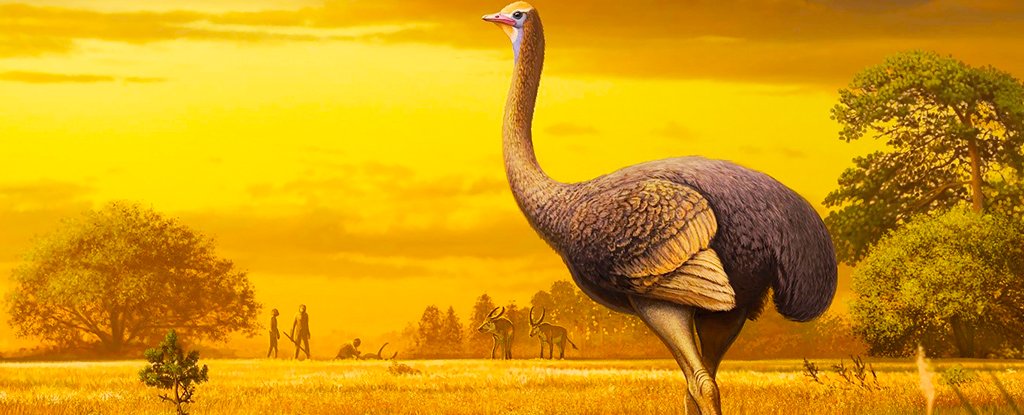
As far as feathered animals go, Pachystruthio dmanisensis was a monster. With an estimated mass of about 450 kilograms (nearly half a tonne), it would make a 150-kilogram adult ostrich - the world's largest living bird - look like a canary.
Bigger birds have existed, but it's not so much its size that makes this flightless avian stand out, but the unexpected location its remains were found on the northern coast of the Black Sea.
Among the pickings that included bones from mammoths, sabre tooth cats, hyenas, horses, and even a small wolf, there was a rather odd femur that just didn't belong.
Russian Academy of Sciences palaeontologist Nikita Zelenkov initially assumed the fossilised leg bone with its impressive heft had to come from a Malagasy elephant bird.
"However, the structure of the bone unexpectedly told a different story," says Zelenkov.
Animals of unusual size – whether massive beasts like moas and elephant birds, or diminutive humans and elephants – are often the result of the kinds of ecological forces found on islands.
In fact, a little over half a century ago, a young biologist named Bristol Foster came up with a rule describing the changes in size certain species experience as they are confined to the resources of a small space.
Without clear signs of large birds evolving on Europe's mainland, palaeontologists have simply assumed Foster's rule stood strong, keeping all European birds to a boringly average size.
This new discovery challenges that assumption, making it the first clear sign that a giant flightless bird once made a home on ancient European soil.
The femur itself is approximately the size expected of an elephant bird, but with a slightly more slender look suggesting it was a runner.
Further estimations based on the bone's proportions put its height somewhere around 3.5 metres (11.5 feet), meaning we might picture P. dmanisensis as either a tall, slim elephant bird or a rather stocky ostrich.
"We don't have enough data yet to say whether it was most closely related to ostriches or to other birds, but we estimate it weighed about 450 kilograms," says Zelenkov.
"This formidable weight is nearly double the largest moa, three times the largest living bird, the common ostrich, and nearly as much as an adult polar bear."
The crown for largest member of class Aves goes to an extinct species of elephant bird called Vorombe titan, which once roamed the African island of Madagascar before dying out roughly a thousand years ago.
At a whopping 860 kilograms (1,895 pounds), it would have double the estimated mass of P. dmanisensis.
Going on the mix of animals found in the cave, researchers estimate they would have been laid to rest somewhere between 1.5 and 2 million years ago.
Homo erectus bones found to the east of the Black Sea have been dated to roughly the same period, making it more than likely relatives of our ancestors not only shared the bird's territory, but might have even hunted it.
With humans on its tail, not to mention predators including sabre-tooth cats, wolves, and hyenas, it's not surprising that P. dmanisensis evolved into a sprinter.
Finding a giant bird on the European mainland helps us better understand not just the kind of fauna humans might have encountered as they migrated across the landscape, but the environment itself.
Foster's rule might well explain the size of some large, flightless birds, but to explain why emus and ostriches stand so tall, researchers turn instead to the Jarman–Bell Principle.
When the going gets tough, animals turn to tough foods. And when it comes to squeezing all you can from a bunch of low-nutrition, fibrous meals, bigger bodies offer bigger advantages.
Applied to P. dmanisensis, we might imagine a drying landscape on the edge of the open steppes, where ancient humans and long-toothed predators seek a quick and easy meal in a fleet-footed, oversized chicken.
Whether or not humans had a hand in its extinction, it's too hard to tell at this stage. Hopefully these won't be the last bones we'll ever find of this massive bird.
Astronauts who head to the International Space Station get to see things that the rest of us can only imagine. As the orbiting laboratory rapidly orbits Earth, it affords its inhabitants the chance to see all manner of jaw-dropping sights, and on the morning of June 22nd, one of those sights happened to be a volcano blowing its top in the Pacific Ocean.
In a new post on its Earth Observatory web portal, NASA shows off a truly gorgeous snapshot of the Raikoke Volcano violently spewing ash high into the sky. The volcano, which sits as its own uninhabited island, isn’t known for frequent eruptions, making this a particularly rare event.
NASA offers the following summary of what we’re seeing in the photo:
On the morning of June 22, astronauts shot a photograph of the volcanic plume rising in a narrow column and then spreading out in a part of the plume known as the umbrella region. That is the area where the density of the plume and the surrounding air equalize and the plume stops rising. The ring of clouds at the base of the column appears to be water vapor.
The volcano only very rarely decides to wake up, with the most recent eruption happening way back in 1924. Before that, the most recent previous eruption was recorded in 1778, making the photo above a once-in-a-lifetime sight. Check out the full-resolution image for the true experience.
The eruption didn’t cause any immediate danger due to the fact that the island has no residents, but it did kick up plenty of ash and dust that traveled several miles into the sky. Winds in the region pushed much of that ash out to sea. A plume of sulfur dioxide was also created by the blast, which scientists observed separating from the ash plume and spreading across the ocean.