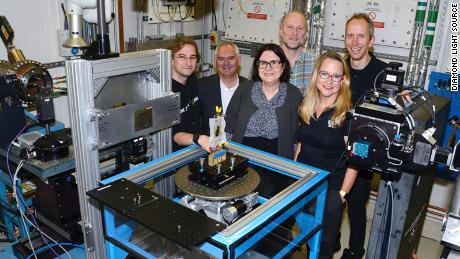
They hope to read scrolls buried by Vesuvius
Machine learning can help trace the ink
https://www.cnn.com/2019/10/05/us/herculaneum-scrolls-scn-trnd/index.html
2019-10-06 01:05:00Z
52780401972599

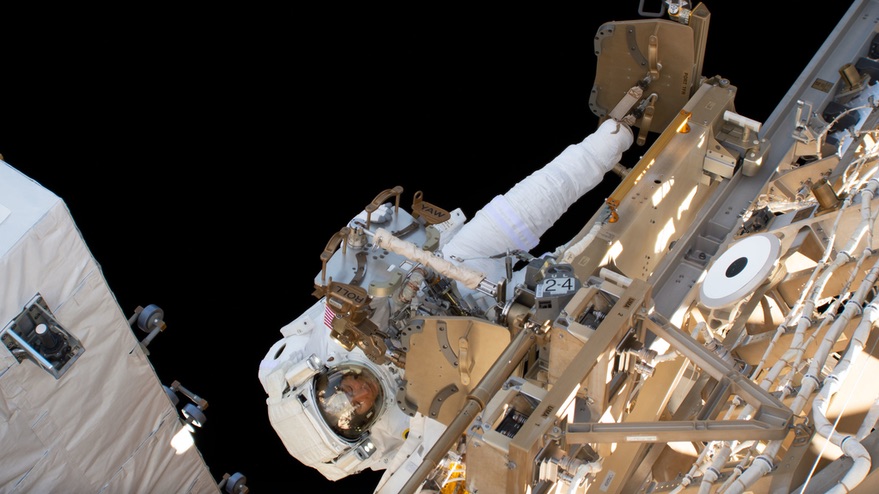
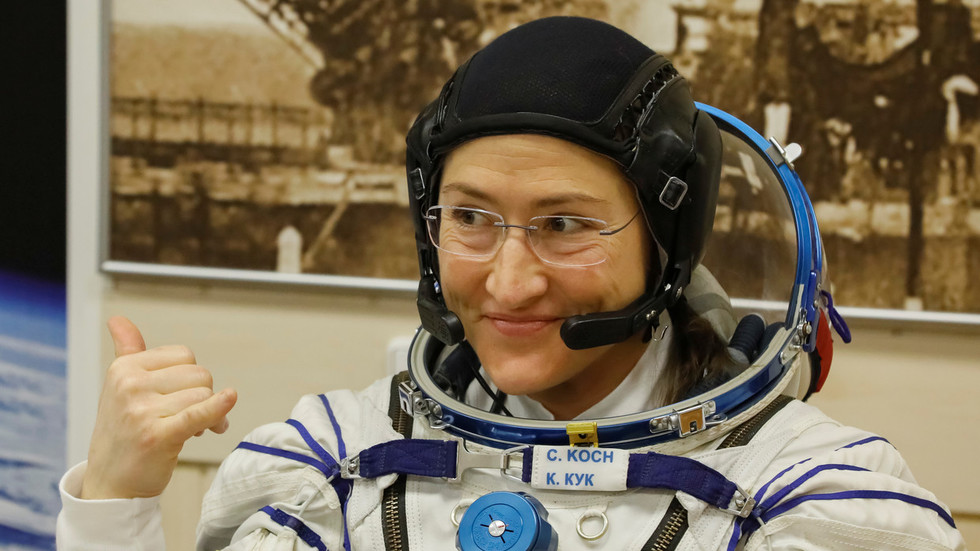
WASHINGTON — As NASA gears up for a lengthy series of spacewalks to perform repairs on the International Space Station, the agency is seeking input on plans to produce a new generation of spacesuits needed for the moon.
At an Oct. 4 briefing, NASA officials outlined plans to conduct 10 spacewalks outside the ISS over the next two to three months. The first five will be devoted to the replacement of batteries for the station’s power supply, while the second five will be used to repair the Alpha Magnetic Spectrometer instrument on the station’s exterior.
“It’s really exciting and highly technically challenging,” Kirk Shireman, NASA ISS program manager, said at the briefing at the Johnson Space Center. “All that’s going to happen over the next two or three months.”
The spacewalks will begin Oct. 6, with astronauts Christina Koch and Andrew Morgan beginning the process of replacing nickel-hydrogen batteries on the far end of the station’s truss with lithium-ion batteries delivered to the station on a Japanese HTV cargo spacecraft last month.
Four more spacewalks are planned, currently scheduled for Oct. 11, 16, 21 and 25. Koch and Morgan will share the spacewalking duties with Jessica Meir and Luca Parmitano. One of the spacewalks, Oct. 21, will feature Koch and Meir, making it the first all-female spacewalk in the agency’s history.
NASA had planned to perform an all-female spacewalk in March featuring Koch and Anne McClain, but changed the lineup after McClain decided she would be more comfortable in a medium-sized suit, rather than a larger suit as previously planned. With only one medium-sized suit ready for use on the station at the time, NASA reshuffled spacewalk assignments.
This time, the suits are ready to support the spacewalks. Megan McArthur, deputy chief of the astronaut office, said at the briefing that all four astronauts are qualified for the battery replacement spacewalks, allowing station officials to mix up crews. Koch and Morgan will do the first two, she said, “because Christina has done similar work and been actually to this worksite.”
In an interview from the station earlier in the week, Koch and Meir said they were aware it would be possible for the two of them to be assigned to the same spacewalk, although no formal decisions had been made at that time. “What we’re doing now shows all of the work that went in to the decades prior, all the women that worked to get us where we are today,” Meir said. “It’s really nice to see how far that we’ve come.”
The second set of spacewalks, expected to begin in early November, will be different. All five will be done by Morgan and Parmitano because the work to repair the AMS requires special skills versus the more generic training that includes activities like battery replacements.
“The instrument wasn’t designed to be repaired in space, so unique tools had to be developed, unique procedures,” McArthur said. “We had to make our best guess of when the sequence of spacewalks would happen and then look to see which crews had time available in their ground training to give them that specialized training.”
The AMS, installed on the station on one of the final shuttle missions in 2011, has suffered the failure of all but one of the pumps in its cooling system, with that last working pump “showing the characteristic signature of failure,” Shireman said.
During the spacewalks, Morgan and Parmitano will install a new set of pumps and replenish its liquid carbon dioxide coolant, a process that will be complex since the AMS was never designed to be repaired in space. “Luca and Drew have been training extensively,” Shireman said. “It will be the most complicated set of EVAs I think we’ve ever done.”
Those spacewalks will be done with a set of spacesuits known as Extravehicular Mobility Units, or EMUs. NASA is in the process of developing a new version of the suit, the Exploration Extravehicular Activity Mobility Unit or xEMU, intended for use on future lunar landing missions, addressing a concern highlighted by outside experts, including the agency’s own Aerospace Safety Advisory Panel in its recent meetings.
NASA issued a request for information Oct. 4 seeking input from industry on how to manufacture the suits. NASA plans to develop initial xEMU models, including one that will be flown to the station for a 2023 test and the two that will be used on the Artemis 3 lunar landing mission in 2024. After that, NASA proposes to have industry build the suits, a process that could start as soon as late 2020, once the xEMU completes its critical design review.
The request for information seeks input on both spacesuit manufacturing as well as potential upgrades or other improvements to the suit, with responses due Nov. 4.
“With the help of partners from industry and academia, we have developed a suite of advanced spacesuit components in preparation for missions to distant destinations,” said Marshall Smith, director of the Human Lunar Exploration Program at NASA Headquarters, in an agency statement. “With the improvements to the suits for Artemis missions, astronauts can now open up new possibilities for science and exploration at the moon.”
Six months after being forced into an embarrassing cancellation due to a shortage of appropriately sized spacesuits, NASA has announced that the first all-female spacewalk is set to go ahead later this month.
Astronauts Christina Koch and Jessica Meir will take part in the giant leap for womankind on October 21 when they venture out of the International Space Station (ISS) to install new batteries.
Koch was due to take part in the landmark walk with Anne McClain back in March but NASA embarrassingly had to alter its plans due to “spacesuit availability” issues.
The newly scheduled walk is now possible because the American space agency sent up another suit with a medium-sized upper torso. NASA’s spacesuits are not differentiated by sex but female astronauts tend to require smaller sizes than their male counterparts and only one medium sized suit was available when the walk was originally set to take place.
Also on rt.com ‘PR disaster’: NASA ditches historic all-female spacewalk after spacesuits won’t fitThe International Space Station generates power using solar panels but batteries are required when the space lab is in the dark and not receiving any sunlight. The all-female walk will be the fourth of five upcoming spacewalks involving battery work. The first is this Sunday, when Koch will venture out with a male colleague.
Since she was denied the opportunity to take part in the first all-female spacewalk, McClain has found herself at the center of extraordinary accusations that she carried out the first crime in space by hacking her ex-spouse’s bank account while on board the ISS. She has denied the accusations and remains an active astronaut.
Also on rt.com NASA astronaut accused of hacking ex-spouse’s bank account from spaceLike this story? Share it with a friend!
[unable to retrieve full-text content]
[unable to retrieve full-text content]
Roughly 24 hours before SpaceX CEO Elon Musk was scheduled to present an update on the company’s Starship launch vehicle development, NASA administrator Jim Bridenstine tweeted a bizarre and wholly unprovoked statement on the subject.
Seemingly equating SpaceX’s recent Crew Dragon delays with the distribution of Elon Musk’s public attention, the NASA administrator’s comment was almost universally criticized by the spaceflight community at large – and rightfully so.
First, some context. Created in 2010 and first supported with serious funding some 12-24 months later, NASA’s Commercial Crew Program (CCP) exists to replace the astronaut transport capabilities once offered by Space Shuttle and now achieved with contracts for seats on Russian Soyuz launches. Primarily the result of inept bureaucracy in NASA and Congress, the Space Shuttle was “retired” in 2011 in full knowledge that the US would have to rely on Russia to get NASA astronauts to the ISS until 2015 (at the absolute earliest).
Congress shut down multiple 2010 proposals to continue Shuttle flights until the late 2010s, choosing instead to kill the Shuttle and divert its associated funding to the expendable Ares V rocket (now the Space Launch System, SLS) and Orion crew capsule. More on that later...
I would not read this as a shot to SpaceX, but rather a reflection of Jim's desire to see all NASA contractors meet their deadlines for government contracts. https://t.co/WNMod2wW3T
— Eric Berger (@SciGuySpace) September 27, 2019
Retweeted by Bridenstine’s official Twitter account, above is the absolute best-case interpretation of the NASA administrator’s comment. Although Eric Berger means well, the interpretation gives NASA far too much credit. Specifically, Bridenstine (or whoever fed him the statement) went out of his way to make it entirely one-sided in its focus on SpaceX. By all appearances, it would have never been posted if not for Elon Musk’s plans to present on Starship. Bridenstine additionally notes that “Commercial Crew is years behind schedule” and indicates that “NASA expects to see the same level of enthusiasm focused on [its] investments”.
Altogether, it’s simply impossible to interpret it as anything less than Bridenstine scolding SpaceX – and SpaceX alone – for not falling to the floor, kissing NASA’s feet, and pretending that Crew Dragon and Falcon 9 are the only things in existence. Absent from Bridenstine’s criticism was NASA’s other (and even more delay-complicit) Commercial Crew Partner, Boeing, who has yet to complete a pad abort or orbital flight test of its Starliner spacecraft. SpaceX completed Crew Dragon’s pad abort in 2015 and completed a flawless orbital flight test in March 2019.


In essence, Bridenstine is publicly implying that SpaceX needs to stop being (or appearing to be) distracted by Starship and focus 100% on Crew Dragon. Boeing was not mentioned, despite being a minimum of six months behind SpaceX and dramatically more ‘distracted’ in the Bridenstine-style interpretation of the word. For reference, Boeing is a publicly-traded company with 150,000 employees, annual revenue of more than $100B, and a market cap of $206B. Boeing has 14 subsidiaries, a handful of which are involved in spaceflight, and has no less than one or two dozen products that are each more fiscally important to shareholders and board members than Starliner.
Compared to Boeing’s annual ~$100B revenue, the entirety of the Starliner development program – from the drawing board in 2010 to crewed, orbital spaceflight sometime in 2020 – is ~$4.8B. On the scale of corporate focus, Starliner has likely been a blip at most in 2019, with the company probably far more focused on the systematic organizational failures that lead to the deaths of hundreds of people in two near-identical 737 MAX crashes. Alas, NASA administrator Jim Bridenstine did not release a statement publicly implying that Boeing needs to devote the “same level of enthusiasm” to Starliner after the second fatal 737 MAX crash in March 2019. Nor did Bridenstine release a statement charging Boeing with a lack of focus after continuous reports of issues with the company’s KC-46 Pegasus tanker program, nor Boeing’s recent $9.2B US Air Force trainer jet contract, or myriad other corporate focuses.

On the other hand, as Musk noted in his relatively subtle September 28th responses to Bridenstine’s implicitly derisive comment, something like 50-80% of the entirety of SpaceX’s workforce and resources are focused on Crew Dragon, the Falcon 9 rockets that will launch it, or a combination of both. At present, Starship is – at most – a side project, even if its strategic importance to SpaceX is hard to exaggerate. The same is largely true for Starlink, SpaceX’s ambitious internet satellite constellation program. It may be true that Starship will eventually make Crew and Cargo Dragon (as well as Falcon 9 and Falcon Heavy) wholly redundant, but that is likely years away and SpaceX will support NASA – as it is contractually required to – for as long as the space agency has vested interest in using Crew Dragon.
At the same time, NASA has explicitly and publicly chosen to prioritize safety over schedule with the Commercial Crew Program, accepting the possibility of delays and cost overruns to ensure that SpaceX and Boeing can build the safest spacecraft possible.
In a September 28th interview with CNN, Musk bluntly noted that the hardware was – at this point in time – more or less ready for flight and will be on-site at SpaceX’s Pad 39A Florida launch site within the next two months. According to Musk, from then on, any additional launch delays can almost entirely be attributed to the paperwork and reviews NASA must complete before giving SpaceX the go-ahead. If Bridenstine wants SpaceX to launch astronauts sooner, one – and possibly the only – solution is to tackle the roadblocks created by NASA’s own self-enforced red tape. The question, then, is whether Bridenstine wants to cut away red tape that may (or may not) be there for good reason.
Detached from whining about a contractor’s CEO presenting about a non-NASA program, complaining about Commercial Crew delays is at least slightly more reasonable. Originally intended to launch as early as 2015, Congress systematically underfunded the Commercial Crew Program by more than 50% for over half a decade, dispersing $2.4B of the $5.8B NASA requested from 2011 to 2016. Unsurprisingly, this completely upended Boeing and SpaceX development schedules. By September 2014, SpaceX aimed to have Crew Dragon certified by NASA for astronaut transport before the end of 2017, but even then, NASA already saw that schedule as overly optimistic.
Friendly reminder that Congress cut commercial crew funding by more than 50% for the first 5 years! ($500M became $230M, $800M became $400M etc.) Meanwhile, SLS/Orion requests of $3-4B got $100M's added by Congress. Not all schedule slips should be created equal. https://t.co/oBnmCZKWBb
— Lori Garver (@Lori_Garver) September 28, 2019
It would be another two years before Congress began to seriously fund Commercial Crew at its requested levels, beginning in FY2016. In response to Bridenstine, former NASA deputy administrator Lori Garver noted that over the ~5 years Congress consistently withheld hundreds of millions of dollars of critical funds from Commercial Crew, NASA’s SLS rocket and Orion spacecraft were just as consistently overfunded above and beyond their budget requests. From 2011 to 2016 alone, SLS and Orion programs requested $11B and received an incredible $16.3B (148%) from Congress, while Commercial Crew requested $5.8B and received $2.4B (41%).

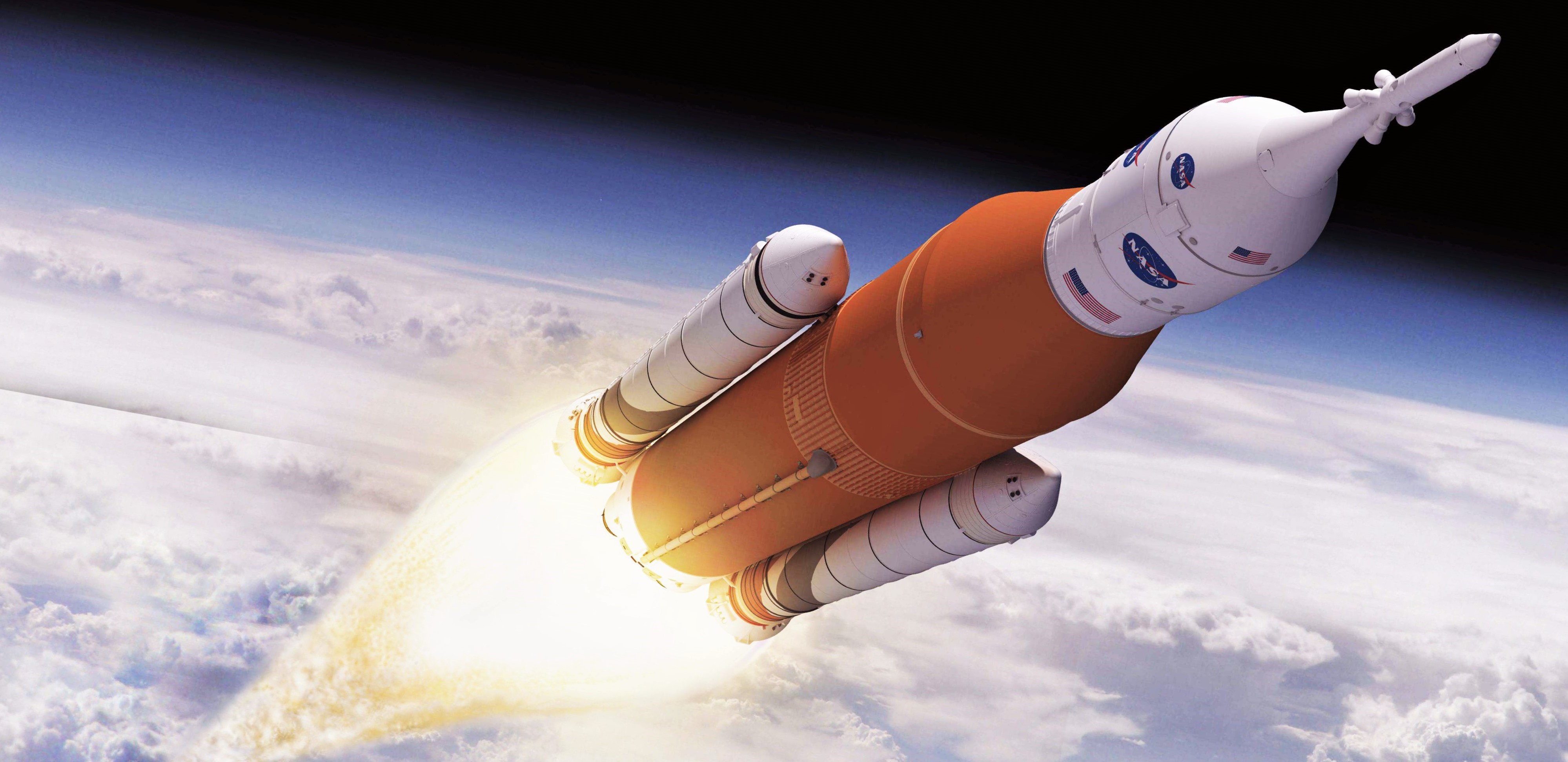
Ironically, despite literally receiving almost seven times as much funding as Crew Dragon and Starliner, SLS and Orion are arguably just as – if not more – delayed than their commercial brethren. Originally intended to launch an uncrewed test flight in 2017, there is now little to no chance that that mission (known then as EM-1 and now as Artemis-1) will launch before 2022, a delay of roughly half a decade. The cost of the SLS/Orion program recently crested $30B, a figure likely to grow to ~$40B before it has conducted a single launch. Of that funding, approximately a third has gone to Boeing, the primary contractor responsible for NASA’s comically-delayed SLS Core Stage – the orange booster pictured above.
The Commercial Crew development program will likely cost NASA $8B total over 9-10 years and produce two clean-sheet, high-performance, (relatively) low-cost crewed spacecraft. After their demonstration launches are completed, NASA will transition to fixed-price service contracts with SpaceX and Boeing to routinely send astronauts to the ISS several times per year.
Put simply, if Bridenstine actually cared about defending “the investments of the American taxpayer” more than wielding their sanctity as a political weapon, he wouldn’t have folded like a house of cards at the slightest resistance to his attempts to cull SLS/Orion delays and cost overruns, and he certainly wouldn’t be wasting breath complaining about what SpaceX’s CEO is or isn’t talking about.
Check out Teslarati’s newsletters for prompt updates, on-the-ground perspectives, and unique glimpses of SpaceX’s rocket launch and recovery processes.

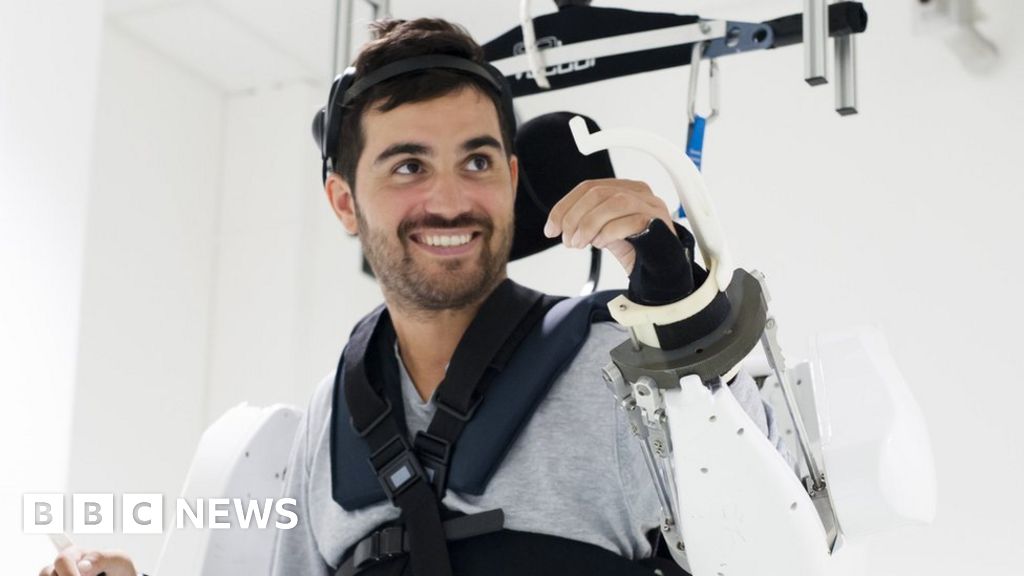
A man has been able to move all four of his paralysed limbs with a mind-controlled exoskeleton suit, French researchers report.
Thibault, 30, said taking his first steps in the suit felt like being the "first man on the Moon".
His movements, particularly walking, are far from perfect and the robo-suit is being used only in the lab.
But researchers say the approach could one day improve patients' quality of life.
Thibault had surgery to place two implants on the surface of the brain, covering the parts of the brain that control movement
Sixty-four electrodes on each implant read the brain activity and beam the instructions to a nearby computer
Sophisticated computer software reads the brainwaves and turns them into instructions for controlling the exoskeleton
Thibault has to be strapped into the exoskeleton
Media playback is unsupported on your device
And he can control each of the arms, manoeuvring them in three-dimensional space
Thibault, who does not want his surname revealed, was an optician before he fell 15m in an incident at a night club four years ago.
The injury to his spinal cord left him paralysed and he spent the next two years in hospital.
But in 2017, he took part in the exoskeleton trial with Clinatec and the University of Grenoble.
Initially he practised using the brain implants to control a virtual character, or avatar, in a computer game, then he moved on to walking in the suit.
"It was like [being the] first man on the Moon. I didn't walk for two years. I forgot what it is to stand, I forgot I was taller than a lot of people in the room," he said.
It took a lot longer to learn how to control the arms.
"It was very difficult because it is a combination of multiple muscles and movements. This is the most impressive thing I do with the exoskeleton."
The 65kg of sophisticated robotics is not completely restoring function.
However, it is a marked advance on similar approaches that allow people to control a single limb with their thoughts.
Thibault does need to be attached to a ceiling-harness in order to minimise the risk of him falling over in the exoskeleton - it means the device is not yet ready to move outside the laboratory.
"This is far from autonomous walking," Prof Alim-Louis Benabid, the president of the Clinatec executive board, told BBC News.
"He does not have the quick and precise movements not to fall, nobody on earth does this."
In tasks where Thibault had to touch specific targets by using the exoskeleton to move his upper and lower arms and rotate his wrists, he was successful 71% of the time.
Prof Benabid, who developed deep brain stimulation for Parkinson's disease, told the BBC: "We have solved the problem and shown the principle is correct. This is proof we can extend the mobility of patients in an exoskeleton.
"This is in [the] direction of giving better quality of life."
The French scientists say they can continue to refine the technology.
At the moment they are limited by the amount of data they can read from the brain, send to a computer, interpret and send to the exoskeleton in real-time.
They have 350 milliseconds to go from thought to movement otherwise the system becomes difficult to control.
It means out of the 64 electrodes on each implant, the researchers are using only 32.
So there is still the potential to read the brain in more detail using more powerful computers and AI to interpret the information from the brain.
There are also plans to develop finger control to allow Thibault to pick up and move objects.
He has already used the implant to control a wheelchair.
There are scientists investigating ways of using exoskeletons to enhance human abilities, a field known as transhumanism, rather than overcome paralysis.
This includes military applications.
"We are absolutely not going in the direction of these extreme and stupid applications," Prof Benabid told the BBC.
"Our job is to repair the injured patients who have lost function."
Prof Tom Shakespeare, from the London School of Hygiene and Tropical Medicine, said while this study presents a "welcome and exciting advance", proof of concept was a long way from usable clinical possibility.
"A danger of hype always exists in this field. Cost constraints mean that hi-tech options are never going to be available to most people in the world with spinal cord injury."
Only 15% of people with disabilities had a wheelchair or other assistive devices, he said.
Details of the exoskeleton have been published in The Lancet Neurology journal.
Follow James on Twitter