Kamis, 03 Oktober 2019

The wild science behind Starship, Elon Musk's planet-hopping rocket - Wired.co.uk

Loren Elliot / Getty Images

Imagine a rocket that could launch and land 1,000 times a year with the reliability of an airplane. Sound unbelievable? That’s what Elon Musk is touting as SpaceX’s next great venture, and among the considerable hype surrounding the project, there just might be some method to the madness.

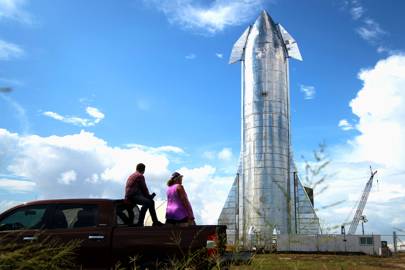
On Saturday, September 28, Musk unveiled the first prototype Starship vehicle to a rapt audience in Boca Chica, Texas. First teased by Musk three years ago, the 50 metre tall vehicle is intended to carry to space humans, satellites, cargo or whatever you can fit into it.

Its lifting capacity of 100,000 kilograms is more than any rocket currently in operation, while the whole system is designed to be reusable – making frequent and plentiful trips to and from space. It will launch atop a large booster called Super Heavy, itself measuring 68 meters tall.

Also designed to be reusable, and sporting 37 of the company’s new Raptor engines compared to the six found on Starship, Super Heavy will be the backbone of getting Starship and its crew or cargo on a journey to another world. Together, the two represent a launch vehicle that’s huge both in its size and ambition.

“The scale of it [is unique],” says Jonathan Goff, president and CEO of startup Altius Space Machines. “Their upper stage [Starship] is bigger than the Space Shuttle’s external tank, which is huge. This thing is bigger than the Statue of Liberty from the platform up. And their first stage [Super Heavy] is almost as big as the Saturn V.”

The ultimate goal of Starship is to launch up to 100 people at a time per flight. While Musk has ambitiously suggested it could launch humans as early as next year, the road to get there – whenever such flights do happen – will be intriguing to watch, however long it takes.

Starship is being built as a series of prototypes escalating in purpose. At the event in Texas, Musk unveiled what is known as the Mark 1 prototype. This vehicle, an early glimpse at what Starship may ultimately look like, will use its three Raptor engines to fly to an altitude of 20 kilometres in a month or two with no humans on board.

SpaceX will then work through a series of further prototypes being built both at Texas and in Florida. The Mark 3 prototype will be designed to reach orbit, while a later version will ultimately carry humans. And this step by step processes, with all the successes and failures along the way, represents a big shift in how rockets are built.

“It’s extraordinary and extraordinarily ambitious,” says Robin Hague, Rocket Engineer at UK launch company Skyrora. “It may actually be SpaceX’s greatest innovation. [Normally] you would have to build the vehicle essentially complete and test it all up.”

One key to this was a design decision to switch from building the rocket out of carbon fibre to stainless steel about a year ago. Aside from a massive cost saving, with steel costing $2,500 (£2,031) a tonne to carbon fibre’s $130,000 (£105,000), steel’s ruggedness allows for a more rustic build process.

“Starship is being built not in a factory but outside using welding,” says space consultant Charlie Garcia from the Massachusetts Institute of Technology (MIT). “This is kind of a big deal, because last time we were doing steel rocket ships welding was not really advanced enough. The fact they were able to [build it] outside in the elements is quite a testament to the ingenuity of the engineers.”

Early Starship prototypes will launch alone, but the later full version will launch atop Super Heavy. The two will travel together for several minutes before Super Heavy separates, coming back to land on the ground, ready for another mission while Starship carries out its intended mission.

For satellite launches it boasts a large payload pay at the front, with a hatched nosecone that opens up to release whatever it has carried into space. Measuring nine meters in diameter and 19 meters high, SpaceX says this is the “largest usable payload volume of any current or in development launcher,” allowing for ambitious missions such as large telescopes.

For missions beyond Earth orbit, such as to the Moon or Mars, Starship will likely need to refuel with another Starship vehicle in orbit before making its journey. SpaceX then intends to land and launch the entirety of the vehicle on other worlds.

The details of what the ride on Starship will be like are under wraps at the moment. And so far, SpaceX has just one customer – Japanese billionaire Yusaku Maezawa – signed up for a flight. But Musk has spoken before about having entertainment on board for the longer trips, like the eight-month or so journey to Mars.

When Starship returns to Earth steel comes into its own once again, providing another benefit over carbon fibre in that it is more resilient to the extreme temperatures of re-entry. Normally spacecraft must have a significant head shield to cope with these temperatures, but Starship will need just a thin coating of ceramic tiles.

As it re-enters the atmosphere after the completion of its mission, large fin-like structures on the vehicle will act as air brakes, slowing and controlling its descent. The vehicle will fall through the atmosphere in a belly-flop position, before it rotates and descends vertically for a landing on the ground, just like SpaceX’s existing Falcon 9 rockets.

“It’s an ingenious re-entry approach,” says Hague. “Those things that look like wings aren’t wings, they’re best thought of as air brakes. Because Starship when it comes back will travel sideways, it’s going to be pancaking through the air, using its flaps for control.”

SpaceX’s approach to Starship has not been devoid of criticism, however. One issue surrounds how life support will work on the vehicle, something that SpaceX has not yet explained. But, notes Garcia, it makes more sense to develop this at a later stage when the rocket itself has been ironed out. “Musk is saying we don’t need to worry about it right now,” he says.

Another criticism is the lack of a launch abort system on Starship and Super Heavy, something that saved the lives of two astronauts last year on a Soyuz rocket. The Space Shuttle notably also did not have a launch abort system, leading to the loss of seven astronauts on the Challenger disaster in 1986.

“It’s kind of risky,” says Goff. “But the problem is, if you’re flying 100 crew, launch abort becomes kind of difficult.”

The lack of a launch abort system ties into SpaceX’s ultimate goal for this vehicle, however, to operate it like an aircraft and require minimal or no checks between flights. Musk has talked about a single Starship vehicle being reused 1,000 times a year, and reducing the amount of refurbishment needed – something the Shuttle relied heavily on – is crucial to that.

“Elon’s ultimate goal here is airline-like reusability and operations,” says Garcia. “His goal is to get Starship to a level of reliability through experience. Would you rather be on the first flight of an airliner or the 50th?”

Starship, if or when it comes to fruition, will be a big shift in the global launch industry. Providing rapid reusable flights to Earth orbit and beyond, it would change forever how we launch to and access space. Even if Starship only launches satellites it will be regarded as a success, being dramatically cheaper to operate even than SpaceX’s Falcon rockets.

But the ultimate goal for Musk has always been to make humans multiplanetary. To have any hope of doing so, he’ll need some sort of futuristic vehicle that looks like it’s been plucked out of science fiction. A Starship, perhaps.

More great stories from WIRED

🤕 No-deal Brexit would trigger a huge data problem

🔓 The iOS 13 privacy settings you should change right now

🔋 Tesla has created a battery that could last one million miles

🗓️ Four-day working weeks aren't the utopia they seem

📧 Get the best tech deals and gadget news in your inbox

Let's block ads! (Why?)


https://www.wired.co.uk/article/elon-musk-spacex-starship-science

2019-10-03 09:36:39Z
52780399422629

A filament fit for space—silk is proven to thrive in outer space temperatures - Phys.org

silk
Credit: CC0 Public Domain

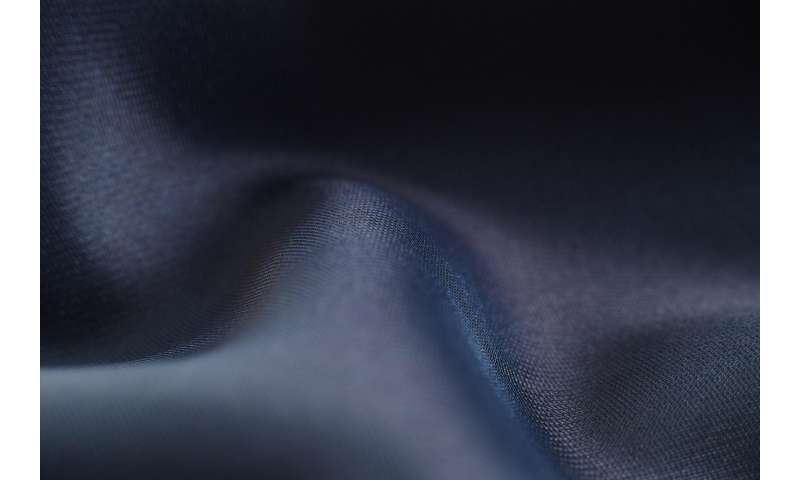
Their initial discovery had seemed like a contradiction because most other polymer fibres embrittle in the cold. But after many years of working on the problem, the group of researchers have discovered that silk's cryogenic toughness is based on its nano-scale fibrills. Sub-microscopic order and hierarchy allows a silk to withstand temperatures of down to -200 C. And possibly even lower, which would make these classic natural luxury fibres ideal for applications in the depths of chilly outer-space.

The interdisciplinary team examined the behaviour and function of several animal silks cooled down to liquid nitrogen temperature of -196 C. The fibres included spider silks but the study focused on the thicker and much more commercial fibres of the wild silkworm Antheraea pernyi.

In an article published today in Materials Chemistry Frontiers, the team was able to show not only 'that' but also 'how' silk increases its toughness under conditions where most materials would become very brittle. Indeed, silk seems to contradict the fundamental understanding of polymer science by not losing but gaining quality under really cold conditions by becoming both stronger and more stretchable. This study examines the 'how' and explains the 'why'. It turns out that the underlying processes rely on the many nano-sized fibrils that make up the core of a silk fibre.

In line with traditional polymer theory, the study asserts that the individual fibrils do indeed become stiffer as they get colder. The novelty and importance of the study lies in the conclusion that this stiffening leads to increased friction between the fribrils. This friction in turn increases crack-energy diversion while also resisting fibril slippage. Changing temperature would also modulate attraction between individual silk protein molecules in turn affecting core properties of each fibril, which is made up from many thousand molecules.

Importantly, the research is able to describe the toughening process on both the micron and nano-scale levels. The team concludes that any crack that tears through the material is diverted each time it hits a nano-fibril forcing it to lose ever more energy in the many detours it has to negotiate. And thus a silk fibre only breaks when the hundreds or thousands of nano-fibrils have first stretched and then slipped and then all of them have individually snapped.

The discovery is pushing boundaries because it studied a material in the conceptually difficult and technologically challenging area that not only spans the micron and nano-scales but also has to be studied at temperatures well below any deep-freezer. The size of scales studied range from the micron size of the fibre to the sub-micron size of a filament bundle to the nano-scale of the fibrils and last but not least to the level supra-molecular structures and single molecules. Against the backdrop of cutting edge science and futuristic applications it is worth remembering that silk is not only 100% a biological fibre but also an agricultural product with millennia of R&D.

It would appear that this study has far-reaching implications by suggesting a broad spectrum of novel applications for silks ranging from new materials for use in Earth's polar regions to novel composites for light-weight aeroplanes and kites flying in the strato- and meso-sphere to, perhaps, even giant webs spun by robot spiders to catch astro-junk in space.

Professor Fritz Vollrath, from Oxford University's Department of Zoology, said: 'We envision that this study will lead to the design and fabrication of new families of tough structural filaments and composites using both natural and silk-inspired filaments for applications in extreme cold conditions such as space.'

Prof Zhengzhong Shao, from the Macromolecular Science Department of Shanghai's Fudan University, said: 'We conclude that the exceptional mechanical toughness of silk fibre at cryogenic temperatures derives from its highly aligned and oriented, relatively independent and extensible nanofibrillar morphology.'

Dr. Juan Guan from Beihang University, in Beijing, said: 'This study provides novel insights into our understanding of the structure-property relationships of natural high-performance materials which we hope will lead to fabricating man-made polymers and composites for low temperature and high impact applications.'

And Dr. Chris Holland from Sheffield University, leader of a European-wide Research Consortium on novel, sustainable bio-fibres based on insights into natural silk spinning said: 'Natural silks continue to prove themselves as gold standard materials for production. The work here identifies that it is not just the chemistry, but how silks are spun and in consequence are structured that is the secret to their success.'

The next steps of the research will further test the amazing properties. A spin-out company, Spintex Ltd, from Oxford University, partly funded by an EU H2020 grant, is exploring spinning silk proteins the spider's way and focuses on copying the sub-micron structures of bundled fibrils.

Silk

  • Natural silks are environmentally sustainable with the animal spin-extruding it from aqueous protein melts at ambient temperatures and low pressures.
  • Many silks are bio-compatible, making them excellent materials for use in medical devices. Silks are light and tend to be very tough suggesting use in light-weight applications where much energy has to be taken up by the material.
  • All silks are bio-disposable, consisting entirely of natural amino acid building blocks that easily integrate into the natural cycle of decay and rebuilding.
  • Last but not least, there is a wealth of information hidden in on protein folding and on Nature's way of making exceptional polymer structures.

Explore further

Nanomaterials help spiders spin the toughest stuff

Citation: A filament fit for space—silk is proven to thrive in outer space temperatures (2019, October 3) retrieved 3 October 2019 from https://phys.org/news/2019-10-filament-spacesilk-proven-outer-space.html

This document is subject to copyright. Apart from any fair dealing for the purpose of private study or research, no part may be reproduced without the written permission. The content is provided for information purposes only.

Let's block ads! (Why?)


https://phys.org/news/2019-10-filament-spacesilk-proven-outer-space.html

2019-10-03 06:52:12Z
CAIiED7coyHdGOr_P05EnxRa_iIqFwgEKg8IACoHCAowpbDpAzCm_hwwj9kp

Saturn's ice moon is spewing organic compounds that could precede life - CNET

enceladus-thermal-jets.jpg

This artist's rendering shows how thermal activity on Enceladus might be spewing dust into space that eventually falls into orbit around Saturn.

NASA/JPL-Caltech

NASA's Cassini probe plunged into Saturn's atmosphere in Sept. 2017, but astronomers are still poring over the data it sent back to Earth before its demise. New research shows Cassini picked up "new kinds of organic compounds", the precursors to amino acids, when it passed through a plume of ice ejected by Saturn's moon Enceladus. The nitrogen- and oxygen-containing compounds are exciting because they suggest the subsurface ocean of the icy moon has, at the very least, the precursors for life to begin. 

The study, published in the journal Monthly Notices of the Royal Astronomical Society on Oct. 2, details the hunt for these compounds with the Cassini spacecraft. 

The Cassini-Huygens mission, launched in 1997, spent approximately 13 years orbiting Saturn and studying the great ringed planet. It has provided Earthlings with some impeccable views of the planet and its moons -- and it has also provided a ton of new science to sift through. Discovering Enceladus spewed up icy particles and vapor into space, and that it has a global subsurface ocean, is a feather in Cassini's cap. 

Now playing: Watch this: Cassini crashes into Saturn ending its 20 year mission

1:39

The new discovery used data from Cassini's mass spectrometers, special instruments hooked up to the spacecraft which can separate out the atoms in a sample. By flying through Saturn's E ring, where some of the ejected ice from Enceladus ended up, the Ion and Neutral Mass Spectrometer (INMS) and Cosmic Dust Analyser (CDA) could pick apart the mixture of molecules contained within. 

How did the organic compounds get in the ice plumes? Astronomers suspect that huge hydrothermal vents deep in Enceladus' ocean eject material from the moon's core. That mixes into the ocean water and eventually gets spewed out of these ice geysers into space. 

That means the compounds detected in the new research have their origins in Enceladus' big ocean. And, scientists think, if the hydrothermal vents on Enceladus work the same way as they do on Earth, then they could spur these compounds into becoming amino acids.

"If the conditions are right, these molecules coming from the deep ocean of Enceladus could be on the same reaction pathway as we see here on Earth," said Nozair Khawaja, a lead researcher on the project, in a press release. "We don't yet know if amino acids are needed for life beyond Earth, but finding the molecules that form amino acids is an important piece of the puzzle."

This isn't the first time organic compounds have been spotted on the ice moon. In June last year, using Cassini data, scientists from the Southwest Research Institute discovered some interesting chemistry happening in the icy moon's ocean

Scientists have been testing the waters of Enceladus for a number of years now, using the Cassini data to reveal more about the mysterious, frozen moon. Hopefully, we will one day get a chance to dive in. 

Let's block ads! (Why?)


https://www.cnet.com/news/saturns-ice-moon-is-spewing-organic-compounds-that-could-precede-life/

2019-10-03 05:08:35Z
52780399669308

NASA Just Revealed an Ocean on Enceladus Contains The Building Blocks of Life - ScienceAlert

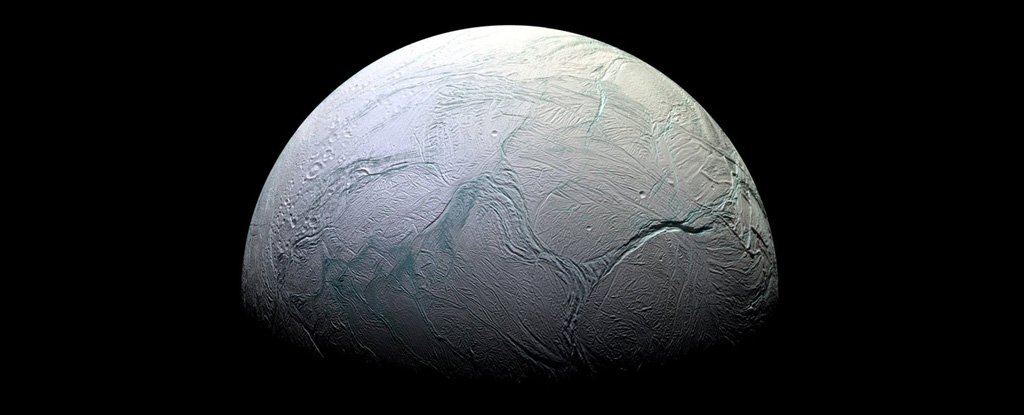
Scientists just found the most basic ingredients for life bursting from an ocean on Saturn's moon Enceladus.

A new analysis of NASA data reveals the presence of organic compounds in the plumes of liquid water that shoot into space from the ocean below Enceladus's icy crust.

These compounds, which carry nitrogen and oxygen, play a key role in producing amino acids ⁠- complex molecules that serve as the building blocks of proteins. Without proteins, life as we know it on Earth couldn't exist.

Scientists have long suspected that the ocean below Enceladus's surface could harbour the ingredients for life. Researchers had detected other organic molecules coming from the icy moon before, but this is the first time anyone has detected them dissolved in the water.

That's critical, since it means the compounds could undergo deep-sea chemical reactions that produce amino acids.

These findings were published Wednesday in the journal Monthly Notices of the Royal Astronomical Society.

"This work shows that Enceladus' ocean has reactive building blocks in abundance, and it's another green light in the investigation of the habitability of Enceladus," Frank Postberg, a co-author of the study, said in a press release.

In deep-sea vents, these compounds could create life

On Enceladus, jets of ocean water and ice regularly shoot out into space through warm cracks in the moon's crust.

The NASA scientists behind the new study analysed data on the chemical composition of those plumes, and found several new organic compounds, some containing nitrogen and some containing oxygen.

These compounds were dissolved in the ocean water below Enceladus's surface. They then evaporated with the surface water, condensed, and froze into the moon's icy crust, according to the study. The plumes blew the compounds into space, where NASA's Cassini spacecraft sensed them as it flew nearby.

The compounds are yet another sign that Enceladus might have its own version of a process that creates life on Earth.

Deep in Earth's oceans, seawater mixes with magma that bubbles up through cracks in the ocean floor. That interaction produces smoky hydrothermal vents that can get as hot as 700 degrees Fahrenheit (370 degrees Celsius).

The vents spew hydrogen-rich hot water, fuelling chemical reactions that transform organic compounds into amino acids. Those amino acids can then stack onto each other like Legos to form proteins, which are crucial for replicating the genetic information that creates life.

This process allows life to develop without the assistance of sunlight. That's important because Enceladus's ice surface is highly reflective and sends what little sunlight the moon receives back into space. Any life there would have to develop in the dark.

Scientists believe that potential hydrothermal vents in the subsurface ocean on Enceladus might work similarly to those on Earth.

"If the conditions are right, these molecules coming from the deep ocean of Enceladus could be on the same reaction pathway as we see here on Earth," Nozair Khawaja, who led the research team behind the latest discovery, said in a release. "We don't yet know if amino acids are needed for life beyond Earth, but finding the molecules that form amino acids is an important piece of the puzzle."

Last year, the team discovered similar organic molecules from the same data. But the molecules were not water-soluble; the researchers believe that they sat on the surface of the Enceladus ocean.

Such compounds would need to dissolve into ocean water in order to interact with hydrothermal vents and produce life. Until now, scientists weren't sure if organic compounds on Enceladus did that.

"Here we are finding smaller and soluble organic building blocks – potential precursors for amino acids and other ingredients required for life on Earth," Jon Hillier, another co-author of the study, said in the release.

More to learn from NASA's Cassini data

The data scientists used to arrive at both of these findings came from NASA's Cassini mission. The probe launched in 1997 and spent 13 years exploring Saturn and its moons.

In September 2017, the mission ended when scientists intentionally sent the spacecraft plummeting into Saturn. They did this to avoid contaminating Enceladus or Titan, another nearby moon that could also harbour life, with Earthly microbes.

Cassini discovered that Enceladus conceals a global ocean of liquid saltwater below its surface, and photographed jets of that water shooting into space. The probe flew through those plumes and collected data about their composition in 2008.

Scientists plan to continue studying that and other data collected by Cassini for decades to come.

NASA also plans to send a probe to Saturn's moon Titan, which is another a prime target in the search for alien life because of its own abundant organic compounds. That mission is set to launch a nuclear-powered helicopter called Dragonfly toward Titan in 2026.

The spacecraft is expected to arrive at Titan in 2034, then start hunting for signs of life.

This article was originally published by Business Insider.

More from Business Insider:

Let's block ads! (Why?)


https://www.sciencealert.com/nasa-just-revealed-enceladus-really-does-contain-the-building-blocks-of-life

2019-10-03 02:03:30Z
CBMiaWh0dHBzOi8vd3d3LnNjaWVuY2VhbGVydC5jb20vbmFzYS1qdXN0LXJldmVhbGVkLWVuY2VsYWR1cy1yZWFsbHktZG9lcy1jb250YWluLXRoZS1idWlsZGluZy1ibG9ja3Mtb2YtbGlmZdIBbWh0dHBzOi8vd3d3LnNjaWVuY2VhbGVydC5jb20vbmFzYS1qdXN0LXJldmVhbGVkLWVuY2VsYWR1cy1yZWFsbHktZG9lcy1jb250YWluLXRoZS1idWlsZGluZy1ibG9ja3Mtb2YtbGlmZS9hbXA

Rabu, 02 Oktober 2019

Black Holes As We Know Them May Not Exist - Livescience.com

[unable to retrieve full-text content]

Black Holes As We Know Them May Not Exist  Livescience.com
https://www.livescience.com/black-holes-may-not-exist.html

2019-10-02 10:45:00Z
CBMiOmh0dHBzOi8vd3d3LmxpdmVzY2llbmNlLmNvbS9ibGFjay1ob2xlcy1tYXktbm90LWV4aXN0Lmh0bWzSAQA

Selasa, 01 Oktober 2019

Babies in the womb have lizard-like hand muscles - BBC News

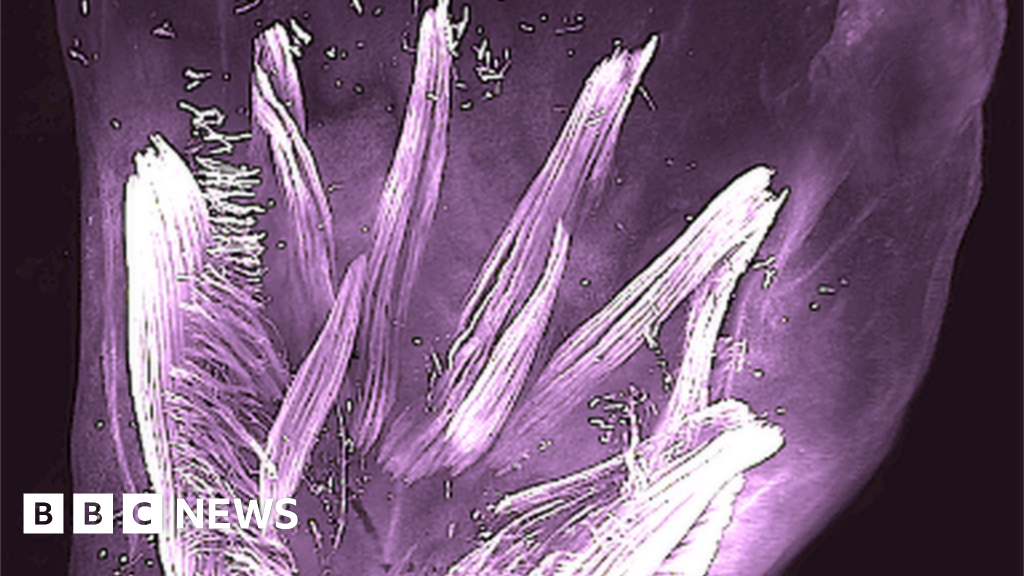
Babies in the womb have extra lizard-like muscles in their hands that most will lose before they are born, medical scans reveal.

They are probably one of the oldest, albeit fleeting, remnants of evolution seen in humans yet, biologists say, in the journal Development.

They date them as 250 million years old - a relic from when reptiles transitioned to mammals.

It is unclear why the human body makes and then deletes them before birth.

The biologists say the developmental step may be what makes thumbs dextrous. Thumbs, unlike other digits, retain an extra muscle.

Rarely, some children and adults have been found to have a few of the extra finger and hand muscles but never all of the dorsometacarpales the biologists saw when they looked at 3D scans of embryos and foetuses at seven to 13 weeks' gestation.

When they do persist, they are sometimes linked with limb deformities. And the biologists say their findings, in 15 developing babies, might help shed light on these types of birth defects.

Lead author Dr Rui Diogo, from the Howard University, in the US, said: "We have a lot of muscles going to the thumb, very precise thumb movements, but we lost a lot of muscles that are going to the other digits.

"In our evolution, we do not need them so much.

"Why are they there? Probably, we cannot just say in evolution, 'Look, I will delete from scratch, from day zero, the muscle going to digits two, three, four, five and I will just keep the one going to the thumb.'

"Probably it is not so easy. Probably you have to form this layer of this muscle and then it disappears on the other digits but persists on the thumbs."

Useless body parts?

He said the structures were more striking than other evolutionary remnants humans retained, such as the apparently redundant appendix, wisdom teeth and coccyx.

"These muscles were lost 250 million years ago," Dr Diogo said.

"No adult mammal, no rat, no dog has those muscles. It's impressive. It was really a long time ago.

"It used to be that we had more understanding of the early development of fishes, frogs, chicken and mice than in our own species but these new techniques allow us to see human development in much greater detail."

Dr Sergio Almécija, an anthropologist who studies ape and human evolution, at the American Museum of Natural History, said the findings provided a deeper appreciation of human development but raised many questions.

"The novelty of this study is that it allows us to visualise - with precision - when exactly during our development some structures appear and/or disappear," he said.

"The important question for me now is, 'What else are we missing? What will we find when all the human body is inspected at this detail during its development?

"'What is causing certain structure to disappear and then to appear again? We can now see how it happens but what about the why?"

The biologists are planning more work looking at other parts of the human body in detail.

They have already studied the feet and know extra muscles develop and disappear there too while babies grow in the womb.

Monkeys and apes still have these muscles and use them to climb and manipulate objects with their feet.

Dr Diogo said: "Some of the things we are losing, it's not that we are getting better humans and more progress. No. We are really losing things that will make super-humans.

"Super-humans would be keeping those muscles because you would be able to move all your digits, including your feet, as thumbs.

"We lost them because we do not need them."

Let's block ads! (Why?)


https://www.bbc.com/news/health-49876827

2019-10-01 09:28:16Z
CBMiKGh0dHBzOi8vd3d3LmJiYy5jb20vbmV3cy9oZWFsdGgtNDk4NzY4MjfSASxodHRwczovL3d3dy5iYmMuY29tL25ld3MvYW1wL2hlYWx0aC00OTg3NjgyNw

The hidden planet in our solar system could be a primordial black hole - CNET

planetix.jpg

Artist's concept of Planet Nine... but is it actually a planet?

Caltech/R. Hurt (IPAC)

Astronomers have long speculated about the existence of "Planet 9", a super-Earth-sized planet in the outer regions of our solar system. It's been hypothesized as an explanation for the unusual clustering of asteroids and comet orbits out beyond Neptune. 

The planet, if it did exist, would most likely be five times the size of Earth and orbit the sun at 250 times the distance. Being so far away, we haven't been able to catch a glimpse of it yet. 

The mysterious, hidden planet is, of course, just a hypothesis at this point and there have been other explanations for the strange paths taken by objects like asteroids. Now there's a new theory: a black hole. A primordial black hole to be more precise. 

Primordial black holes are hypothetical black holes that originated soon after the Big Bang. Compared to other black holes, a PBH is old and small. Their existence has been difficult to prove -- as authors James Unwin and Jakub Scholtz speculated to Gizmodo, this primordial black hole could be the size of a bowling ball. Weirdly enough, the black hole is small enough for Unwin and Scholtz to include a 1:1 diagram of it in their paper, released on pre-print website arXiv.

At that size though, it may be impossible to spot. Can you imagine trying to spot completely black bowling ball on the other side of the solar system? Me neither. 

Regardless, the new paper suggests the strange orbits in the outer regions of our solar system could be the result of one of these primordial black holes.

A bowling ball sized black hole of the outer reaches of the solar system is an outlandish theory, but at this point it's no less plausible than the existence of super Earth sized planet. Both scenarios would be equally exciting for astronomers.

Let's block ads! (Why?)


https://www.cnet.com/news/the-hidden-planet-in-our-solar-system-could-be-a-primordial-black-hole/

2019-10-01 05:44:00Z
52780395509410